Building software with AI at the center is a fundamentally different problem than adding AI to software that already exists. The architecture, the data model, the delivery pipeline, and the governance layer all have to be designed for AI from the start. Retrofitting those decisions later costs more than getting them right the first time. Inspectavio was built with that principle as the starting point. The result is a modern inspection platform where AI is not a feature added to a workflow. It is woven into the workflow itself.
Thessia Labs designed and built the AI architecture powering Inspectavio's Avio AI, the inspection assistant that helps professional inspectors work faster, document more consistently, and deliver better reports without giving up control over a single finding.
Why AI-First Demands a Different Architecture
Most software platforms that add AI to an existing product run into the same set of problems. The AI layer runs independently of the application's logic, governance, and data model. There is no structured way to evaluate outputs before they reach users. There is no feedback mechanism to improve the system over time. And there is no way for the platform to stop a bad output before it creates a problem.
In professional inspection work, those gaps are not acceptable. A licensed home inspector signs off on every item in a report. A defect described incorrectly, an image misclassified, or a recommendation that contradicts what the inspector observed on site creates legal and reputational exposure for that inspector. The AI layer has to be built with that accountability in mind.
Inspectavio was designed so that AI operates within a governed pipeline. Avio AI assists at every stage of the inspection workflow, but the inspector retains full authority over every output that leaves the platform. That is not a user experience decision. It is an architectural one.
What Avio AI Does
Avio AI is the branded AI assistant built into Inspectavio. It covers the parts of the inspection workflow that take the most time and introduce the most inconsistency.
Defect detection reviews inspection photos and surfaces possible issues before they can be missed in a crawl space, attic, or fast walkthrough. The inspector confirms what matters before anything reaches the report.
Field notes assistance takes rough spoken or typed notes from the inspection and shapes them into clear, report-ready language without changing the meaning of the original finding.
Image captions generate descriptive captions for every photo automatically, eliminating the repetitive retyping that slows down report completion after a long field day.
Summary generation compiles findings at the end of an inspection into a clean summary section that communicates what matters most to the buyer and the agent.
Report review checks completed reports for gaps, inconsistencies, and clarity issues before delivery, then flags the report for the inspector's final approval. Nothing sends automatically.
Multilingual support runs all of these capabilities in English, Spanish, French, and Portuguese, covering the markets where Inspectavio operates. Most inspection software AI functions only in English. Avio AI was built to work for inspectors wherever they work.
The Three AI Patterns That Make This Production-Ready
The architecture behind Avio AI uses three design patterns that determine whether an AI system behaves reliably in professional use or creates liability at scale.
LLM as a Judge
The first pattern addresses the core reliability problem in production AI. After the model generates an inspection comment, caption, or defect observation, a second model evaluates the output against quality and accuracy thresholds before it reaches the inspector. Outputs that do not pass evaluation do not surface in the application.
This evaluation layer is what separates a production AI system from a demo. Demo environments are controlled. Field conditions are not. Inspectors work across properties with variable lighting, variable defect types, and variable document requirements. The LLM as Judge pattern is the mechanism that keeps output quality consistent across all of those conditions.
Evaluator-Optimizer
The second pattern handles quality over time. Rather than relying on periodic manual retraining, the Evaluator-Optimizer creates a structured feedback loop that uses evaluation results to improve output quality on an ongoing basis. The range of acceptable outputs narrows as the system learns. The quality floor rises rather than staying static.
For a platform operating across multiple inspection standards, including InterNACHI, ASHI, CAHPI, and customizable templates, and across residential, commercial, and industrial inspection types, continuous improvement is not optional. The Evaluator-Optimizer is what makes that possible without constant manual intervention.
Human-in-the-Loop
The third pattern governs what the inspector sees and does at every stage. AI suggestions appear in the platform as recommendations. The inspector reviews, edits, and publishes only when satisfied. Nothing leaves the platform without explicit inspector approval.
This is not a safety feature added at the end to reassure skeptical users. It is the foundational design decision. Avio AI is built to assist professional judgment, not to substitute for it. The inspector is licensed and accountable. The platform reflects that accountability at the system level.
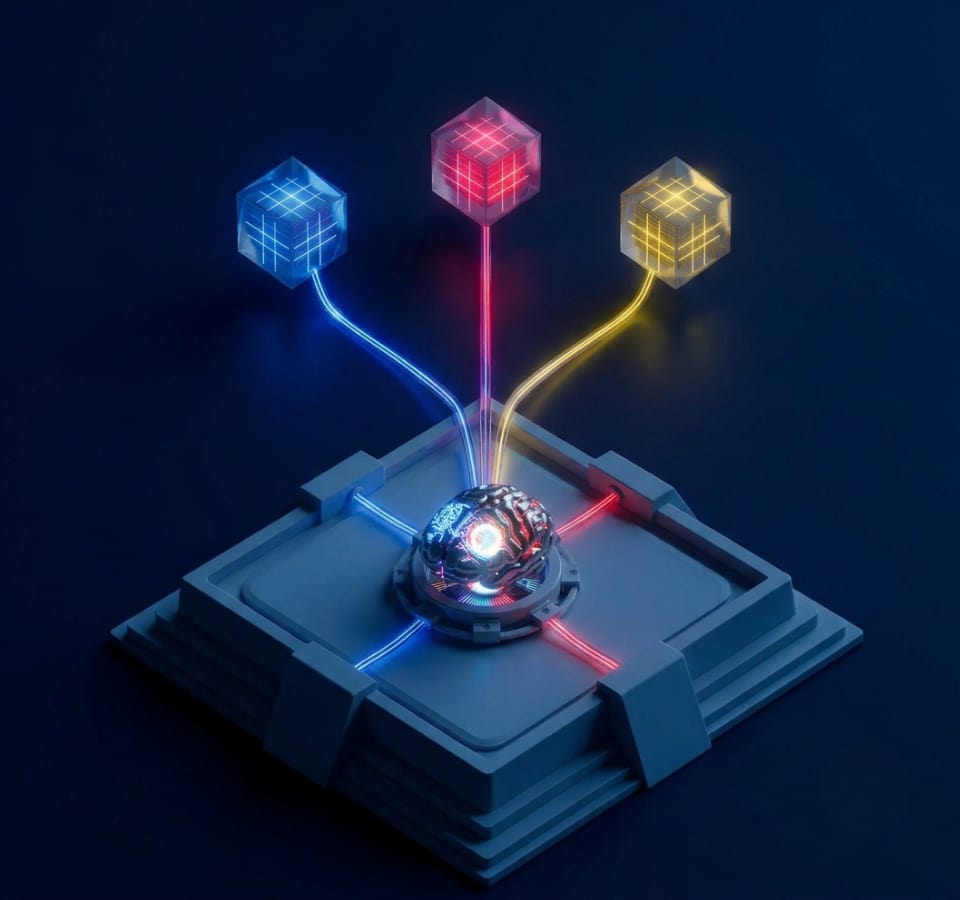
Together, the three patterns form a complete production pipeline: the model generates, the evaluator filters, the optimizer improves, and the inspector decides. Each layer addresses a specific failure mode that appears when AI is deployed without governance architecture.
The Outcome: A Platform Built for Professional Inspectors
Inspectavio supports residential, commercial, mold, radon, new home, and specialized inspection types across multiple international markets. Inspectors using the platform save an average of 2.5 hours per inspection. Customer satisfaction sits at 98 percent with a 4.9 out of 5 average rating.
The AI capabilities that would create risk in a platform without governance architecture work as professional tools in Inspectavio because the architecture was built to handle professional accountability. Inspectors who prefer to work without AI assistance can do so. Those who use Avio AI do so with the knowledge that every suggestion has passed evaluation and that they retain full authority over every report before delivery.
The inspector-first principle runs through every aspect of the design. Inspection photos, notes, and client data are not used to train external models. Reports are never sent automatically. Every finding, comment, and caption is the inspector's to accept, adjust, or remove.
What This Means for Teams Building AI Into Professional Software
The architecture developed for Inspectavio is not inspection-specific. Any software product serving professionals who carry liability for their outputs faces the same design challenge: how do you ship AI capabilities that practitioners will actually trust?
The answer is governance architecture built from the start, not added later. LLM as a Judge, Evaluator-Optimizer, and Human-in-the-Loop are patterns that apply wherever professional accountability is involved: legal document review, financial analysis, healthcare documentation, engineering reports, and any other domain where an AI output that reaches a user has real consequences.
The most common mistake teams make is treating governance as a phase that comes after the AI is working. It is not. Governance decisions shape the model architecture, the data pipeline, the application interface, and the incident response process. When those decisions are deferred, the cost of retrofitting them is measured in months, not days.
There is also an adoption dimension that purely technical decisions miss. Professionals resist AI tools that feel autonomous or uncontrollable, and they resist them loudly, in ways that undermine the entire product. The Human-in-the-Loop pattern is not just a safety mechanism. It is the design choice that makes practitioners willing to use the AI in the first place, because every interaction reinforces that they remain in control.
Building this correctly requires thinking about the evaluation layer, the feedback loop, and the human review process before writing a line of application code. Those decisions cannot be retrofitted effectively once the architecture is set.
If your team is designing AI-first software and needs the architecture to support professional use in production, Thessia Labs builds these systems.
You can reach out directly to start the conversation.